
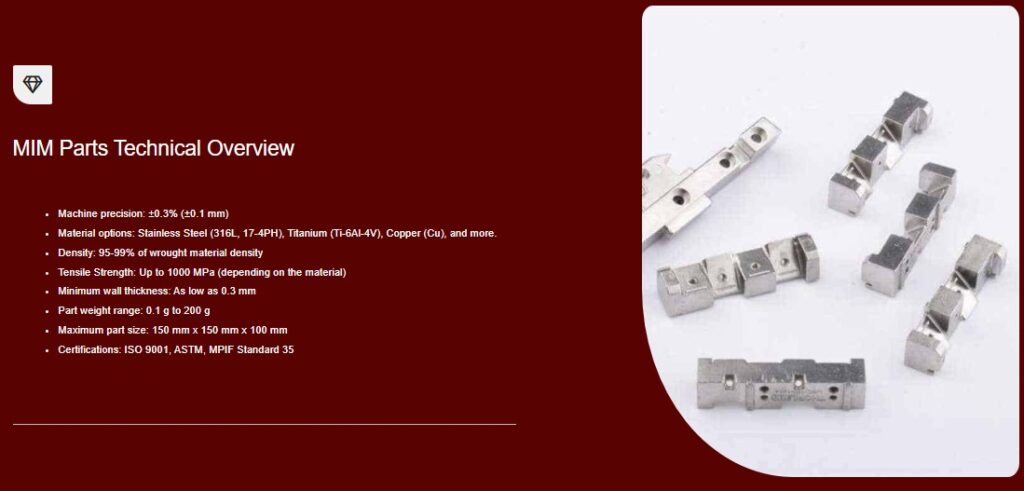
Sintered metal has emerged as a revolutionary material in modern engineering, offering a combination of strength, precision, and cost-effectiveness that traditional manufacturing methods struggle to achieve. As industries continue to demand components that are lighter, stronger, and more complex, sintered metal is increasingly becoming the material of choice for engineers worldwide. From automotive parts to aerospace components, its versatility is reshaping how products are designed and manufactured.
Understanding Sintered Metal
Sintered metal is produced through a process called powder metallurgy, where finely powdered metal is compressed into a desired shape and then heated below its melting point to fuse the particles together. Unlike casting or machining, sintering does not require the metal to fully melt, which reduces energy consumption and limits distortion. This technique allows for precise control over the shape, density, and mechanical properties of the final component, making it ideal for high-performance applications.
The ability to create near-net-shape components is one of the most significant advantages of sintered metal. Engineers can produce complex geometries that would be difficult or impossible with traditional methods, all while minimizing material waste. This efficiency makes sintered metal an environmentally friendly option, aligning with growing sustainability goals in modern manufacturing.
Advantages Over Traditional Metal Fabrication
Sintered metal offers several benefits over conventional metalworking techniques. Firstly, it allows for consistent material properties throughout the component. Because the sintering process is tightly controlled, engineers can achieve uniform density, hardness, and porosity, which translates into more reliable performance under stress.
Another advantage is cost efficiency. Traditional machining often involves removing excess material from a larger metal block, which leads to significant waste and higher production costs. In contrast, sintering starts with powdered metal in the approximate shape of the final product, reducing both material waste and machining time. For industries producing high volumes of parts, these savings can be substantial.
Additionally, sintered metal can incorporate materials that are difficult to process through other methods. Alloys with high melting points, composites, or metals with unique mechanical properties can be combined during the powder metallurgy stage to achieve tailored performance characteristics. This flexibility enables engineers to create components optimized for specific applications, whether that’s wear resistance, thermal conductivity, or magnetic properties.
Transforming Automotive Engineering
The automotive industry has been one of the earliest adopters of sintered metal technology. Components such as gears, bearings, and structural parts benefit from the material’s strength and precision. Sintered metal allows for the production of lightweight parts without sacrificing durability, helping manufacturers meet fuel efficiency and emission standards.
Furthermore, sintered metal components can integrate lubrication channels and other complex features directly into the part, reducing the need for assembly and improving overall reliability. This capability has led to significant improvements in drivetrain efficiency, noise reduction, and component lifespan. With electric vehicles gaining popularity, sintered metal is also being used to produce high-performance electrical components that can withstand thermal stress and mechanical wear.
Applications in Aerospace and Defense
Aerospace engineering demands materials that are not only strong but also lightweight and resistant to extreme conditions. Sintered metal meets these requirements by offering high strength-to-weight ratios and the ability to produce intricate geometries that reduce weight without compromising structural integrity. Components such as turbine blades, fuel system parts, and landing gear elements are increasingly manufactured using sintered metal.
In defense applications, the material’s reliability and precision make it suitable for critical components like firearm mechanisms and missile guidance systems. The capacity to combine different metals in a single sintered part enables engineers to enhance performance characteristics, such as corrosion resistance or heat tolerance, without additional manufacturing steps. This flexibility gives military and aerospace engineers the edge in designing systems that are both durable and efficient.
Medical Device Innovations
Sintered metal is also making significant inroads in the medical field. Implants, surgical tools, and orthopedic components can be manufactured with sintered metal to achieve high precision and biocompatibility. For example, porous sintered metal structures mimic the natural porosity of bone, promoting tissue integration and faster healing.
Additionally, the ability to produce complex, customized geometries allows medical device manufacturers to create patient-specific implants, which are increasingly important in personalized medicine. This customization can improve surgical outcomes and reduce recovery times, demonstrating how sintered metal is not just transforming engineering but also patient care.
Enhancing Industrial Machinery and Tooling
Industrial machinery relies heavily on components that can withstand wear, pressure, and high temperatures. Sintered metal offers excellent wear resistance and strength, making it ideal for gears, bushings, and cutting tools. By optimizing the sintering process, engineers can create parts with enhanced hardness in specific areas while maintaining overall toughness, extending the lifespan of machinery.
The efficiency of producing near-net-shape parts also reduces downtime for maintenance, as replacement components can be manufactured quickly and with minimal post-processing. In industries where machinery performance directly impacts productivity and revenue, the adoption of sintered metal has become a strategic advantage.
Environmental and Sustainability Benefits
Beyond performance, sintered metal is contributing to more sustainable manufacturing practices. The powder metallurgy process minimizes material waste, reduces energy consumption compared to casting or forging, and enables recycling of leftover metal powders. This sustainability aspect is becoming increasingly important as companies aim to reduce their environmental footprint while maintaining high-quality production standards.
Moreover, lightweight sintered metal components in automotive and aerospace applications contribute to fuel efficiency and lower emissions, further emphasizing the material’s role in green engineering.
Future Prospects
The future of sintered metal in engineering applications looks exceptionally promising. Advances in additive manufacturing and 3D printing are expanding the possibilities of powder metallurgy, allowing even more intricate and efficient designs. Engineers are exploring multi-material sintering and advanced alloys to achieve performance characteristics previously thought impossible.
As industries continue to prioritize efficiency, customization, and sustainability, sintered metal is poised to become a cornerstone of modern engineering. Its combination of precision, strength, and versatility ensures that it will remain a key material in the design and manufacture of next-generation products.
Conclusion
Sintered metal has fundamentally transformed engineering applications across multiple industries. Its ability to produce complex, high-strength, and lightweight components efficiently is revolutionizing automotive, aerospace, medical, and industrial engineering. Beyond technical advantages, sintered metal supports sustainable manufacturing practices, contributing to a more environmentally conscious approach to production.